

Wall Street is back on its feet. After last week's sharp sell-off, the S&P 500 has climbed back above 7,600, while the Nasdaq is approaching 28,400. On the surface, the recovery looks encouraging. But there is a problem: inflation is proving more persistent than expected, the US dollar is breaking higher, and the Federal Reserve may not be finished raising interest rates.
The latest US CPI figures came in at 0.3%, above the expected 0.2%. That may look like a small difference, but it is enough to put December's Fed meeting firmly back in the spotlight. Fed Governor Christopher Waller has even raised the possibility of a 50-basis-point rate increase.
So why are stocks rising again? And could the latest recovery turn into a bull trap if the Fed adopts a more aggressive stance? Across forex, gold and crypto, the market is already showing some warning signs.
Stocks Rebound – But Is the Rally Built on Solid Ground?
The S&P 500 has recovered above 7,600 after falling to around 7,300 last Friday. This rebound improves the short-term technical picture and suggests that buyers are stepping back in after the recent sell-off. The Nasdaq has followed a similar path, recovering from last week's low near 26,267 to around 28,377.
The recovery is encouraging, but the Nasdaq remains slightly weaker. That matters because technology stocks have been an important driver of the broader market's gains. If investors become concerned that interest rates could stay higher for longer, growth stocks may be among the first to feel the pressure.
For now, the upward move suggests that investors are willing to buy the dip. However, the real test will come if the dollar continues to strengthen and bond yields move higher. A sustained recovery in equities would need to withstand those pressures rather than simply benefit from a temporary improvement in sentiment.
The Fed's December Dilemma: Another Rate Hike Coming?
The latest inflation figures have made the Fed's job more complicated. US CPI rose by 0.3%, exceeding the 0.2% forecast. While the difference appears modest, it reinforces concerns that inflation is not cooling quickly enough.
Christopher Waller's comments have added another layer of uncertainty. The Fed Governor has put a possible 50-basis-point increase on the table, a much more aggressive move than the usual quarter-point adjustment. That does not mean such a decision is imminent, but it shows how seriously some policymakers are taking the inflation risk.
A December rate hike could change the market outlook considerably. Higher interest rates tend to support the US dollar and increase pressure on assets that benefit from cheaper financing. Gold could struggle, while equities – particularly technology stocks – may find it harder to extend their recovery.
The question is no longer simply whether the Fed will cut rates again. Investors must now consider whether another round of tightening is possible.
US Dollar Breaks Higher – EUR/USD and GBP/USD Under Pressure
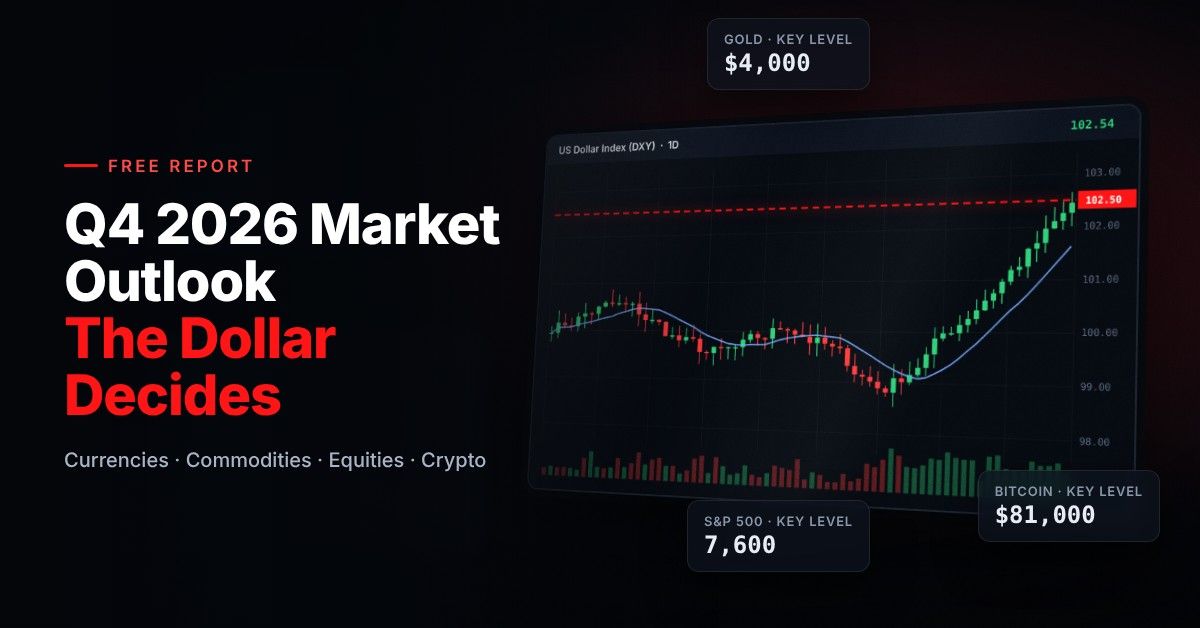
The US dollar is sending a clear signal. The Dollar Index (DXY) has climbed to 102.75, moving above the important 102.50 resistance area. If the index can establish itself above this breakout level, further gains could follow.
The recovery in the dollar is already weighing on major currency pairs. EUR/USD has slipped below 1.1100, putting the pair under renewed downside pressure. GBP/USD has also fallen below 1.3300, with sellers maintaining control.
AUD/USD is facing an equally difficult environment. Trading around 0.6850, the Australian dollar has broken below a key support area. The combination of a stronger US dollar and fragile risk sentiment is creating additional headwinds. A sustained move lower could open the door to another leg of weakness.
The next move in US Treasury yields could reinforce the dollar trend. The 10-year yield has bounced from recent support around 4.85% and returned to 5.00%. If the upward trend resumes, it could provide further support for the greenback.
For forex traders, the key question is whether the dollar's breakout marks the beginning of a broader bullish move or whether the market is already approaching overbought territory.
Gold Loses Its Shine as the Dollar Takes Control
Gold is struggling to regain momentum. After testing its 50-day moving average around USD 4,150, XAU/USD turned lower and has since fallen below USD 4,000. The rejection at this technical resistance level suggests that buyers are becoming more cautious.
The stronger dollar is one of the main obstacles. Since gold is priced in US dollars, a stronger greenback makes the metal more expensive for international buyers. Rising Treasury yields add further pressure because they increase the opportunity cost of holding an asset that does not pay interest.
Technically, the next important support area is around USD 3,880. A break below that level could accelerate selling and signal that the recent decline is becoming more than a short-term correction. On the upside, gold would first need to recover lost ground and challenge the USD 4,150 resistance area again.
Silver is showing slightly more resilience, trading around USD 52.10. Its industrial exposure may be helping it hold up better while equity markets recover. Nevertheless, the strong dollar and rising yields remain potential headwinds for both precious metals.
Bitcoin Fails to Follow Wall Street Higher
One of the most interesting market divergences is developing between equities and cryptocurrencies. While the S&P 500 and Nasdaq have recovered from last week's lows, Bitcoin is still struggling around USD 74,200. Its next important support lies near USD 74,000.
Ethereum and several other major cryptocurrencies are also showing weakness. This suggests that the recent improvement in equity-market sentiment has not translated into a broad return of risk appetite.
That divergence deserves attention. If investors were becoming significantly more confident about the outlook, cryptocurrencies might be expected to participate in the recovery. Their continued weakness suggests that traders remain selective and cautious.
A decisive break below USD 74,000 could put Bitcoin under further pressure. Conversely, a successful defence of this area could provide the foundation for a recovery, particularly if equities continue to advance.
Oil Holds Firm Despite Calmer Geopolitics
USOUSD is trading around USD 86.90, maintaining a relatively firm position despite a calmer geopolitical backdrop. While geopolitical tensions remain an important source of uncertainty, oil prices are also being supported by expectations of resilient demand.
For traders, the next question is whether the market can maintain these levels without a fresh geopolitical catalyst. Stronger demand expectations could keep prices elevated, while a deterioration in the global growth outlook might eventually weigh on the energy market.
Higher oil prices also matter for the Fed. If energy costs remain elevated, they could make the fight against inflation more difficult and reinforce expectations that interest rates will stay higher for longer.
The Bottom Line: Is the Stock Market Ignoring the Warning Signs?
The latest rebound in US equities looks positive, with the S&P 500 back above 7,600 and the Nasdaq recovering towards 28,400. But the broader market picture is less comfortable. Inflation remains stubborn, the US dollar has broken above resistance, and the 10-year Treasury yield has returned to 5.00%.
Forex traders are already seeing the consequences, with EUR/USD below 1.1100, GBP/USD under 1.3300 and AUD/USD struggling around 0.6850. Gold has failed at its 50-day moving average and is approaching another important support zone, while Bitcoin is fighting to hold USD 74,000 despite the recovery in equities.
The coming weeks could therefore prove decisive. If stocks continue to rise despite a stronger dollar and higher yields, the current recovery may have more room to run. But if the Fed begins preparing markets for another rate increase in December, the rally could quickly lose momentum.