


Month-End Flows and NFP Take Center Stage as Markets Reposition
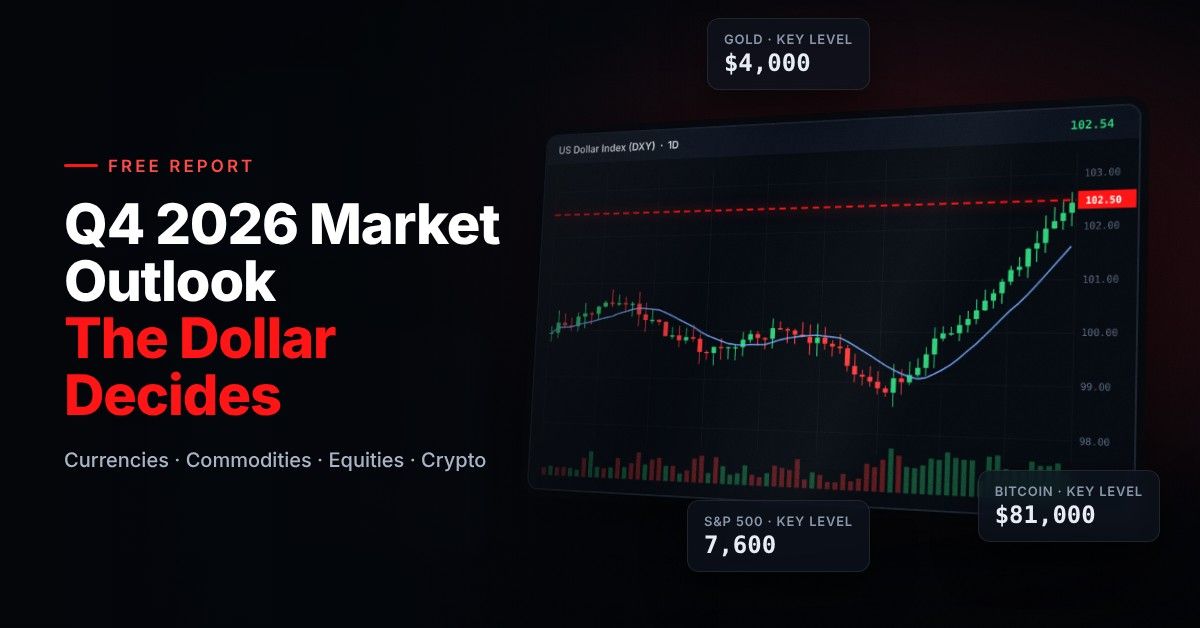
Markets are entering a period of transition as June comes to an end and investors reposition portfolios ahead of the new month. Month-end profit-taking has softened the US dollar after its recent rally, allowing some risk assets to stabilize temporarily. However, the broader macro picture remains largely unchanged.
The Federal Reserve continues to maintain a relatively hawkish stance, suggesting that interest rates are likely to remain elevated for longer. At the same time, geopolitical tensions have eased slightly as hopes for a lasting ceasefire with Iran improve, although risks remain. Investors now turn their attention to this week's US Nonfarm Payrolls report, which is expected to provide fresh guidance for the dollar and determine the next move across financial markets.
Foreign Exchange: Dollar Remains the Dominant Theme
The US dollar has weakened modestly into the end of June, largely due to portfolio rebalancing and profit-taking. Such moves are common around month-end as institutional investors adjust their positions before the start of a new reporting period.
Despite the recent pullback, the broader outlook still favors the greenback. The Federal Reserve remains more hawkish than many of its global counterparts, supporting higher US yields and maintaining demand for the dollar.
EUR/USD has lost significant momentum following the latest Fed communication. Although the pair has attempted a modest recovery, rallies may prove difficult to sustain while the interest-rate outlook continues to favor the United States.
Meanwhile, the Japanese yen remains weak across the board. Markets continue to speculate about possible intervention by the Bank of Japan, but price action remains largely one-sided as investors continue to favor higher-yielding currencies.
Attention now shifts to Friday's US Nonfarm Payrolls report, which could determine whether the recent dollar weakness proves temporary or develops into a broader correction.
Stocks: Technical Recovery Meets Macro Uncertainty
Equity markets have shown signs of stabilization after rebounding from important technical support levels. The S&P 500 continues to recover from recent lows, with buyers returning after the latest pullback.
A weaker dollar could provide additional support for equities, particularly if upcoming economic data reduces concerns about further monetary tightening. At the same time, most corporate earnings have been broadly positive, while the resilience of the US economy continues to support investor confidence. European markets have also participated in the recovery, with Germany's DAX extending its recent gains.
Investor enthusiasm surrounding artificial intelligence remains strong, although some analysts believe parts of the sector have become increasingly expensive following the remarkable rally over the past year. This has encouraged selective profit-taking and modest sector rotation.
Market attention has also turned to SpaceX following its expected inclusion in the MSCI World Index, highlighting continued investor demand for innovative growth companies.
Nevertheless, geopolitical risks remain an important wildcard. Although tensions surrounding Iran have eased and the conflict in Ukraine has remained relatively quiet, unexpected developments during the typically quieter summer months could quickly weigh on investor sentiment.
Gold: Dollar Direction Remains Critical
Gold continues to struggle as the stronger US dollar offsets traditional safe-haven demand.
Although geopolitical uncertainty would normally support precious metals, expectations that US interest rates will remain relatively high continue to limit investor appetite for gold. As a non-yielding asset, gold often comes under pressure whenever the dollar strengthens and bond yields remain attractive.
From a technical perspective, the $4,000 level represents a major support zone. A decisive break below this level could encourage additional selling pressure and expose the market to a deeper correction.
For now, traders are likely to focus primarily on US dollar movements and this week's employment report.
Cryptocurrencies: Bitcoin Faces Another Important Test
Cryptocurrencies remain under pressure despite occasional short-term recoveries.
Bitcoin has struggled to regain upside momentum after failing to establish itself above recent resistance levels. The market remains highly sensitive to changes in overall risk sentiment and US dollar performance.
The $60,000 level continues to represent a critical support area. A sustained move below this zone could trigger additional downside momentum and place further pressure on the broader cryptocurrency market, including major altcoins.
Unless the US dollar weakens more meaningfully, cryptocurrencies may continue to face a challenging environment throughout the coming weeks.
Looking Ahead
The upcoming Nonfarm Payrolls report will likely be the key catalyst for global financial markets. Investors will closely monitor the strength of the US labor market for further clues regarding Federal Reserve policy.
Whether the recent month-end weakness in the US dollar develops into a broader trend or simply proves to be temporary profit-taking will largely determine the direction of currencies, equities, commodities and cryptocurrencies during the weeks ahead
The information provided is for general informational purposes only and does not constitute investment advice, an investment recommendation, a personalized recommendation, or an offer or solicitation to engage in any investment activity.