


Prediction markets are a powerful yet often misunderstood tool for forecasting real‑world events—from elections and sports to economic data and corporate decisions.
In recent years, the rise of crypto‑based platforms has thrust prediction markets into the spotlight, but many investors still ask: what are prediction markets, how do they work, and are they even legal?
This guide breaks down the core ideas in plain language, covering the mechanics, risks, legal landscape, and alternatives so you can decide whether using prediction markets fits your trading or risk‑management strategy.
Prediction Markets — Key Takeaways
- Prediction markets are venues where people trade event contracts whose prices reflect the collective probability of future outcomes, functioning as specialized forecasting markets rather than traditional investment tools.
- They operate through market creation, trading, and settlement, often using binary options‑style contracts, but can suffer from prediction market liquidity issues, gambling‑like behavior, and regulatory uncertainty.
- Using prediction markets exposes traders to counterparty risk, potential manipulation, and complex regulatory frameworks, making them better suited for experienced, risk‑tolerant participants.
- For most traders, alternatives such as CFD trading on events, social trading, automated strategies, and traditional derivatives offer similar exposure to event‑driven moves with clearer regulation, deeper liquidity, and more familiar risk‑management frameworks, making them a generally safer and more practical choice.
What is a Prediction Market?
A prediction market is a type of marketplace where participants trade contracts based on the outcome of future events—ranging from financial trends to political elections. Each contract typically pays a fixed amount (such as $1 or 100 units) if a specific outcome occurs, and nothing if it does not.
At first glance, these markets may resemble traditional trading environments. However, instead of investing in underlying assets, participants are effectively speculating whether an event will happen. Prices fluctuate based on supply and demand and are often interpreted as the market’s implied probability. For example, if a contract such as “Company X stock will exceed 150 by year-end” is trading at 0.80, it suggests an 80% perceived likelihood of that outcome.
Prediction markets are also known as information or decision markets, as they aim to aggregate collective opinion into a single price signal. While they are often used for forecasting and gauging sentiment, their structure raises an important question: are they truly investment tools—or simply a more sophisticated form of speculation?
In practice, several defining characteristics set prediction markets apart from traditional financial instruments:
- No underlying asset ownership: Participants do not own stocks, commodities, or currencies—only outcome-based contracts.
- Binary payoff structure: Returns are typically “all or nothing, "depending entirely on the final outcome.
- Crowd-driven pricing: Market prices are shaped by collective opinion rather than fundamental analysis.
- Event-focused exposure: Trades are tied to specific scenarios, not long-term market performance
- High sensitivity to news and sentiment: Prices can shift rapidly based on headlines, rumors, or public perception.
To better understand the events that influence market sentiment, traders can rely on timely insights from NAGA’s News and Analysis section. Access to structured market updates allows for more informed decision-making—moving beyond speculation toward analysis-driven trading.
How do Prediction Markets Work?
Prediction markets operate in a way that may feel familiar to traders, as they share some similarities with traditional financial platforms. However, instead of trading assets like stocks, commodities, or CFDs, participants trade contracts based purely on the outcome of specific events.
In most cases, these markets follow a simple lifecycle:
1. Market creation
A platform defines a clear, verifiable event—such as “Will a central bank raise interest rates in June?”—and offers predefined outcomes, typically in a binary format (e.g., Yes/No). A contract with a fixed potential payout represents each outcome.
2. Trading phase
Participants buy and sell contracts based on their expectations. Prices fluctuate dynamically, usually between 0 and 1, reflecting the market’s perceived probability of an outcome. While this may resemble price discovery in financial markets, movements are often driven more by sentiment and speculation than structured analysis.
3. Resolution and settlement
Once the event outcome is confirmed, the market is settled. Winning contracts pay out their full value, while losing positions expire worthless. Depending on the platform, results may be verified either by a central authority or through automated systems such as blockchain oracles.
Although this process mirrors certain aspects of trading—such as price movement and market participation—the key difference lies in what is being traded. In prediction markets, success depends entirely on correctly anticipating an event, rather than analyzing asset performance, market structure, or risk factors.
For traders seeking a more structured approach, platforms such as NAGA One provide access to real financial instruments, where decisions are guided by market analysis, technical indicators, and risk management strategies—often supported by educational resources like the NAGA Academy—rather than binary event outcomes.
Are prediction markets legal?
The legality of prediction markets varies significantly across jurisdictions and depends on how these platforms are structured. In many regions, they operate in a regulatory grey area, creating uncertainty for participants.
In some countries, prediction markets are classified similarly to gambling products, such as sports betting, and therefore require strict licensing and oversight. In others, platforms attempt to position themselves as “information markets” or “forecasting tools” to operate outside traditional financial regulations.
The rise of blockchain-based platforms has added another layer of complexity. While crypto-based prediction markets often promote decentralization and automated settlement through smart contracts, regulators—including authorities in the United States and the European Union—have indicated that these products may still fall under existing securities or derivatives laws, depending on their structure and use.
This fragmented regulatory landscape raises important considerations for traders and investors:
- Unclear classification: Prediction markets may be treated as gambling, derivatives, or unregulated financial instruments
- Licensing uncertainty: Not all platforms operate under recognized regulatory frameworks
- Jurisdictional restrictions: Access and legality can change depending on your country of residence
- Evolving policies: Regulators continue to update rules as these markets grow in popularity
As a result, participating in prediction markets may involve not only financial risk, but also regulatory uncertainty. For traders, this highlights the importance of choosing platforms that operate within clearly defined frameworks—where transparency, compliance, and investor protection are central to the overall trading experience.
What are the risks associated with prediction markets?
Prediction markets may seem like an intriguing way for traders to forecast events, but they carry risks beyond normal market fluctuations. Unlike traditional trading platforms, where decisions can be guided by analysis, technical indicators, and risk management tools, prediction markets rely heavily on speculation and crowd sentiment.
Liquidity risk
In many event prediction markets, especially niche or long‑dated ones, order books can be thin. This leads to:
- Wide bid–ask spreads, making it harder to trade at fair prices.
- Difficulty entering or exiting large positions quickly, increasing prediction market liquidity risk.
Counterparty and platform risk
Depending on the venue, you may face:
- Centralized platforms: Risk that the operator becomes insolvent, restricts withdrawals, or freezes accounts. Stronger regulation and regular audits can mitigate this, but never eliminate it.
- Decentralized prediction markets: While smart contracts reduce some risks, incidents such as oracle manipulation, contract bugs, or governance failures can still erode confidence.
Insider‑trading and manipulation risk
Because prices reflect collective information, any participant with privileged knowledge can shift probabilities. This opens the door to:
- Insider‑trading‑type behavior, where traders act on non‑public information.
- Deliberate attempts to manipulate probabilities through coordinated trading around key events.
Gambling‑like and behavioral risk
Many users treat prediction markets like trading platforms, but from a psychological perspective they can resemble sports betting:
- Gambling behavior: Chasing losses, over‑trading, and emotional decision‑making are common.
- Speculative markets mindset: Traders may focus on short‑term “hot” events rather than diversified, risk‑managed strategies.
Legal and compliance risk
Even if a prediction market platform is technically accessible to you, local laws may classify the activity as illegal gambling, securities trading without a license, or something similar. This legal risk can include:
- Fines or penalties for using unlicensed venues.
- Restrictions on advertisements or sponsored content, as seen in recent policy changes for prediction‑market‑style platforms.
What is the future of prediction markets?
Prediction markets are evolving rapidly, driven by technological advances and increasing interest in tools that aggregate collective forecasts. While the sector continues to grow, these markets still carry inherent risks, highlighting the importance of informed participation and careful evaluation before engaging.
Crypto and Decentralisation
Blockchain-based, decentralised prediction markets are gaining traction because they offer global access, permissionless participation, and automated settlement via smart contracts and oracles. These features reduce the need for manual oversight and improve scalability, making markets more accessible to a wider audience.
At the same time, decentralisation brings challenges. Regulatory uncertainty persists across jurisdictions, and technical risks—such as smart contract bugs or oracle manipulation—remain significant. Traders should recognise that innovation comes with both opportunities and potential pitfalls.
Institutional and Corporate Use
Beyond retail speculation, organisations are exploring prediction markets to enhance internal decision-making.
- Internal project forecasting: Estimating timelines, product launches, or sales targets by leveraging collective insights from employees and stakeholders.
- Risk management: Teams “bet” on internal KPIs or market events to gauge outcomes, helping organisations evaluate assumptions and plan strategically.
This controlled corporate use demonstrates how prediction markets can provide valuable information without exposing participants to the volatility and behavioural risks common in public speculative markets.
Integration with Analytics and AI
Predictive analytics and AI are increasingly combined with crowdsourced forecasts to refine probability estimates and improve prediction accuracy. This hybrid approach can enhance forecasting in areas like politics, sports, finance, and macroeconomics.
Even with advanced analytics, traders must remain aware of inherent uncertainties. Sophisticated models can complement human judgment but do not remove market risks entirely, reinforcing the need for disciplined trading strategies and informed decision-making.
Looking Ahead
With stronger regulation, clearer product design, and improved analytics, prediction markets have the potential to evolve from niche speculative tools into mainstream instruments for market prediction and risk expression.
For individual traders, this trend underscores the importance of choosing structured, regulated trading environments. Some of the best trading platforms, including NAGA One, provide access to analysis-driven instruments, risk management tools, and data-backed decision-making—helping bridge the gap between event-based speculation and more informed, strategy-focused trading.
Alternatives to Prediction Markets
If you’re interested in expressing views on future events but want different structures or risk profiles than prediction markets, there are several practical alternatives that align more closely with traditional trading and risk‑management strategies:
CFD Trading on Events
One of the most direct alternatives to event‑based speculation is CFD (Contract for Difference) trading on major financial instruments. With CFDs, you don’t bet on the outcome of an isolated event—instead, you trade on how markets respond to real-world developments. For example:
- A central bank’s rate decision may move currency pairs, indices, or commodities, and CFDs allow you to capture these moves by opening long (buy) or short (sell) positions.
- CFDs on stocks, forex, commodities, and futures provide exposure to event‑driven volatility while embedding those price moves within regulated market structures where analysis, risk management, and liquidity are clearer.
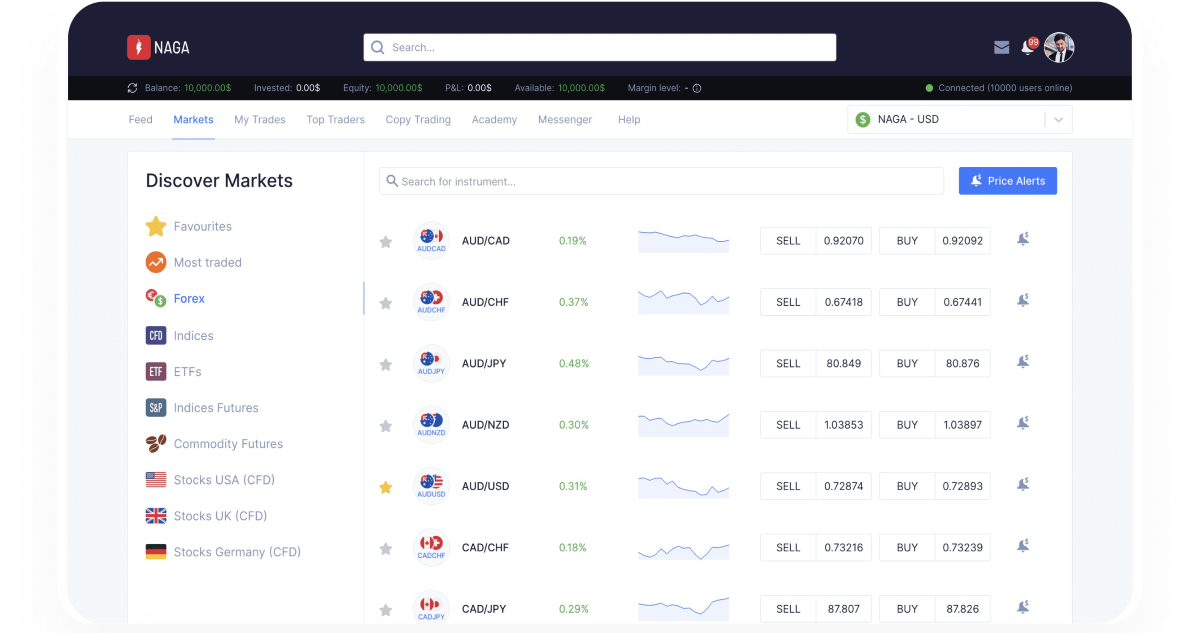
Platforms like NAGA offer extensive CFD markets on a range of asset classes, allowing traders to express directional views without relying on isolated event bets.
Social Trading and Copy‑Trading
Another effective alternative is social trading, where traders can observe, engage with, and replicate the strategies of more experienced participants. Instead of directly wagering on specific events, you follow traders who use established strategies to respond to news, data releases, or market trends.
- With social trading, you can automatically copy the portfolio decisions of seasoned traders while still maintaining control over risk settings such as stop losses and take profits.
- This approach blends collective intelligence with individual risk awareness, offering a community‑based learning experience rather than isolated prediction betting.
On platforms such as NAGA, the social trading network allows real‑time copying of top traders’ positions across markets, giving you a way to learn from and mirror experienced strategies.
Automated Strategies and Algorithmic Trading
Sophisticated traders often use automated strategies or algorithmic systems that react to economic calendars, news feeds, and data releases in real time. These systems can scan for event-related signals and adjust positions dynamically, enabling a form of programmatic event anticipation without participating in prediction markets directly.
Algorithmic setups can apply technical indicators, machine-learning models, or predefined rules to capture volatility or directional shifts. Many traders implement these strategies through platforms such as MetaTrader 5 (MT5), which support automated trading tools and algorithmic execution within a structured environment. Although this approach requires more technical setup, it provides a disciplined way to incorporate event-driven insights into broader trading strategies.
Learn more about automated trading strategies and MT5 in the NAGA Academy guide.
Traditional Derivatives and Options
Traditional derivatives like options, futures, and volatility products remain powerful tools for expressing directional views with defined payoff profiles:
- Options can give you event‑like exposure (e.g., earnings announcements or policy decisions) while offering tools such as hedging strategies, spreads, and limited risk structures.
- Futures allow you to engage in broad market expectations tied to economic indicators or sector performance.
These instruments are typically more liquid and better regulated than many niche prediction markets, making them attractive for traders seeking clarity, depth, and defined risk.
Learn More About Futures Contracts
Predictive markets vs traditional trading
The table below summarizes the key differences, benefits, and risk profiles of each approach, helping traders choose the option that best fits their objectives and comfort level.
Feature / Market Type Prediction Markets CFD Trading Social Trading Options & Traditional Derivatives Primary Focus Expressing views on specific event outcomes Trading based on asset price movements influenced by events Following/copying strategies of more experienced traders Managing or taking positions on market direction or volatility Risk Profile High – price volatility and behavioral factors Moderate – regulated instruments with risk management tools Moderate – risk depends on copied trader strategy Moderate to High – defined payoffs but can be leveraged Regulation & Licensing Often unclear or decentralized, regulatory gray areas Regulated CFDs with clear oversight (e.g., NAGA) Trusted platforms for social trading with compliance safeguards Typically well-regulated exchanges and instruments Liquidity Low to moderate, depends on market size High – major currencies, indices, commodities, crypto Moderate – depends on trader network and copied positions High – major markets like stocks, indices, futures Technical Tools Limited – mainly event contracts Charts, technical analysis, risk management tools Performance tracking, autotrading, copying signals Options chains, spreads, hedging, volatility analysis Community / Collective Intelligence Market price aggregates participants’ views Limited, mostly individual analysis-driven Strong – collective strategies and performance insights Minimal – mostly individual trading Ease of Use for Beginners Moderate – requires understanding of event probabilities Beginner-friendly with guidance, demo accounts Beginner-friendly – copy top traders directly Requires some knowledge of options/futures mechanics Best Use Case Expressing expectations on political, economic, or niche events Capturing market reactions to events (rates, CPI, earnings) Learning and following more experienced traders’ strategies Hedging exposure or taking structured positions on market movements A table comparing prediction markets vs. CFD and social trading platforms from a trading and investing perspective
This overview highlights the main differences between prediction markets and regulated alternatives like CFDs and social trading, focusing on how they operate, their risk profiles, and key advantages for traders and investors.
Why CFDs and Social Trading Stand Out with Naga.com
Among the alternatives, CFD markets and social trading communities often provide the most practical and adaptable substitutes for prediction markets. They allow traders to harness:
- Liquidity from established markets
- Regulatory frameworks that support transparency
- Advanced tools for risk management and strategy execution
- Community insights and collaborative learning
Platforms such as NAGA combine these advantages—CFDs across a wide range of assets and social trading features—offering traders a balanced approach that blends analysis, collective intelligence, and disciplined strategy into their decision‑making process.
Conclusion
Prediction markets—whether centralized, crypto‑based, or internal corporate tools—represent a unique intersection of finance, information aggregation, and behavioral economics. At their core, these markets allow participants to trade contracts tied to specific events, with prices reflecting collective expectations of future outcomes.
As the sector matures, prediction markets may increasingly integrate into mainstream risk management and corporate decision-making workflows. For now, they remain a niche area suitable for traders comfortable with speculative dynamics, event-driven risks, and regulatory uncertainty.
For those considering participation, it is wise to start small, choose platforms with clear regulations and transparency, and approach these markets as high‑knowledge, high-risk environments rather than quick-profit opportunities.
Platforms like NAGA provide structured alternatives—including CFDs, social trading, and regulated derivatives—that allow traders to engage with market events while leveraging risk management tools, analytics, and community insights to make informed decisions.
Sources:
- https://www.cftc.gov
- https://www.esma.europa.eu
- https://www.bis.org
- https://www.nber.org
- https://www.worldbank.org/ext/en/home