




The UAE stock market gives investors access to companies operating across a range of industries, from banking and telecommunications to aviation, real estate, retail, and business services. For investors researching the top UAE stocks, understanding what each company does is an important first step before comparing its financial performance, valuation, and risks.
This guide looks at a selection of UAE-listed companies included in the NAGA Real Stocks list shared for this article. The selection covers different sectors and business models, helping readers explore a broader range of publicly traded UAE companies rather than focusing on a single industry.
What to know before exploring UAE stocks
- Availability: The companies featured below were selected from the NAGA Real Stocks list shared for this article. Instrument availability can change and may depend on your country and account.
- Selection: The list is an educational selection based on sector variety and company business activities. It is not a ranking of expected returns or a recommendation to buy.
- Research: Review each company's financial statements, valuation, dividend policy, liquidity, and business risks before making an investment decision.
- Investment approach: Buying a real stock is different from trading a stock CFD. A real stock represents ownership of shares, while a CFD provides price exposure without ownership of the underlying shares.
How to identify some of the top UAE stocks
Finding UAE stocks that may fit your portfolio involves more than looking at recent share-price performance. Investors should consider the company's financial position, competitive advantages, industry outlook, and the risks that could affect its future results.
1. Understand the company's business model
Start by examining how the company generates revenue, which markets it serves, and what differentiates it from competitors. A bank, an airline, a property developer, and a retailer face very different economic conditions and business risks.
2. Review financial performance
Study revenue, operating profit, net income, cash flow, debt, and earnings per share over several reporting periods. Comparing these measures with companies in the same industry can help investors understand whether a business is improving and how efficiently it operates.
3. Assess valuation and dividends
Valuation ratios such as price-to-earnings and price-to-book can provide useful context, but they should be compared with relevant peers and the company's own history. Dividend investors should also review the company's payout policy, cash generation, and ability to sustain distributions.
4. Consider liquidity and trading conditions
Trading volume, bid-ask spreads, and market depth can affect the ease and cost of buying or selling shares. This is particularly relevant when researching smaller companies, where trading activity may be lower or less consistent.
5. Match the stock to your investment objectives
Some investors focus on dividend income, while others look for companies with opportunities to expand their operations or enter new markets. Your time horizon, risk tolerance, and portfolio diversification should guide the decision.
Expert Insight: What Should Investors Look for When Evaluating UAE Stocks?
We asked Frank Walbaum, NAGA Lead Market Expert, to share his perspective on the key factors investors should consider when evaluating UAE-listed companies and identifying potentially attractive investment opportunities.
"When evaluating UAE stocks, I look beyond revenue growth and market sentiment. A strong business model, healthy cash flow, manageable debt and a reasonable valuation are much more important. I also pay attention to how a company is positioned to benefit from the UAE's economic diversification and growing international role. Ultimately, a good company is not automatically a good investment — the price you pay matters."
10 UAE stocks to research on NAGA
The following companies were selected from the NAGA Real Stocks list shared for this article. They represent a range of sectors in the UAE market, including aviation, banking, financial services, property, telecommunications, parking services, retail, and commercial real estate.
The order below is for editorial presentation only. It does not indicate a ranking by quality, performance, or investment potential.
Selected UAE-listed companies
- Air Arabia PJSC – Aviation
- Ajman Bank – Islamic banking
- Al Ansari Financial Services – Financial services and remittances
- Commercial Bank of Dubai – Banking
- Dubai Investments – Diversified investments
- Emaar Development – Real estate development
- Emirates Integrated Telecommunications Company (du) – Telecommunications
- Parkin Company – Parking and urban mobility services
- Spinneys 1961 Holding – Food retail
- TECOM Group – Business districts and commercial real estate
#1 Air Arabia PJSC – A UAE Aviation Stock
Air Arabia PJSC is a UAE-based low-cost airline operating a network of flights across regional and international destinations. Its business model focuses on affordable air travel, route expansion, fleet utilisation, and operational efficiency.
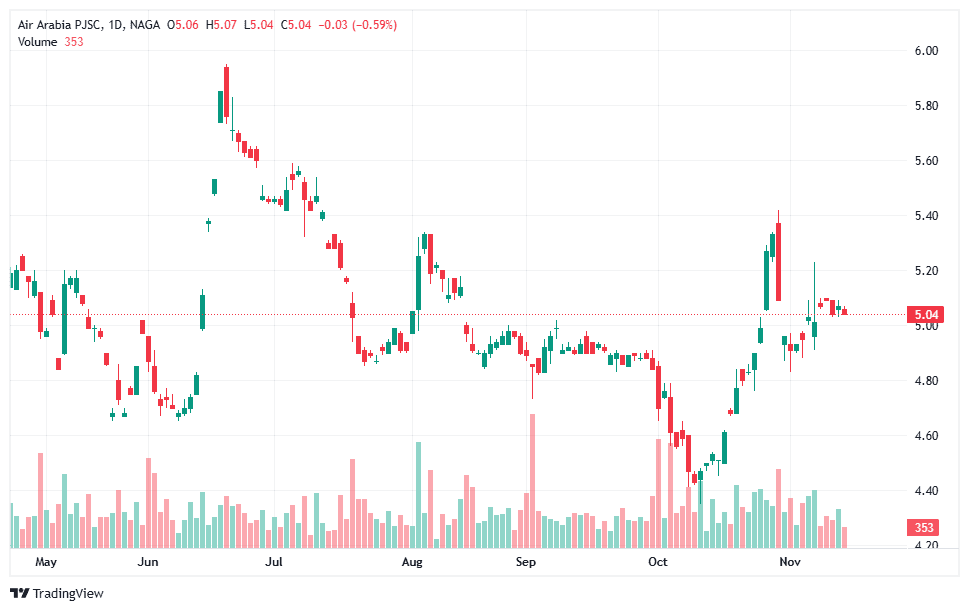
Past performance is not a reliable indicator of future results. All historical data—including, but not limited to, returns, volatility, and other performance metrics—should not be considered a guarantee of future performance.
Investors researching Air Arabia may want to examine passenger traffic, load factors, average fares, route performance, fleet costs, and the company's ability to manage fuel-price movements. Airline profitability can also be affected by competition, currency movements, economic conditions, and changes in travel demand.
What to consider when researching Air Arabia
- Passenger demand and load-factor trends.
- Route network development and competitive positioning.
- Fuel expenses, aircraft-related costs, and operating margins.
- Exposure to regional economic and geopolitical developments.
#2 Ajman Bank – An Islamic Banking Stock in the UAE
Ajman Bank is an Islamic financial institution based in the UAE. It provides banking products and services structured around Islamic finance principles, serving individuals and businesses through financing, deposits, and other banking services.
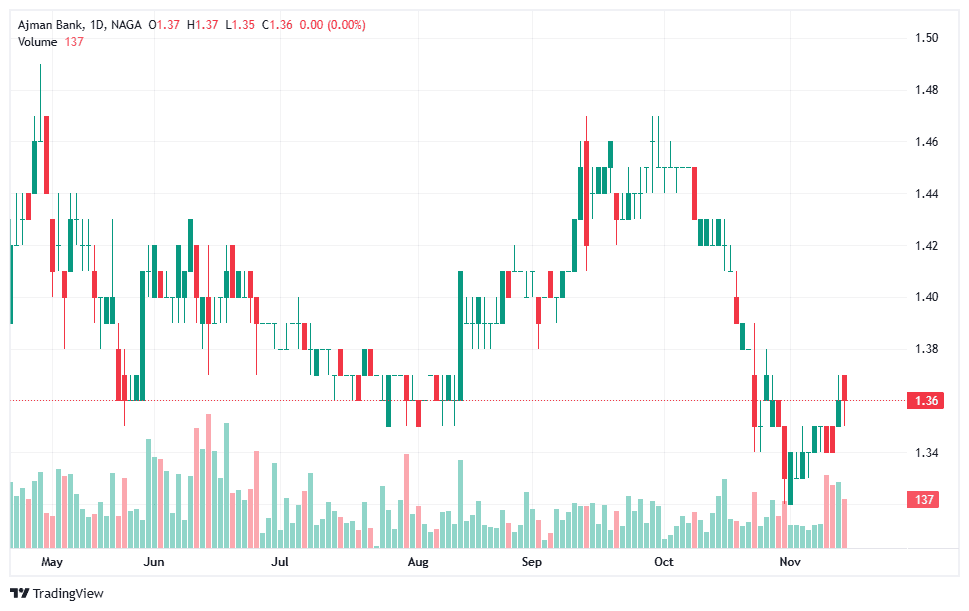
Past performance is not a reliable indicator of future results. All historical data—including, but not limited to, returns, volatility, and other performance metrics—should not be considered a guarantee of future performance.
When analysing a bank such as Ajman Bank, investors should look beyond revenue growth. Asset quality, financing growth, capital adequacy, liquidity, operating costs, and impairment charges can all influence financial performance. Changes in interest-rate conditions may also affect the wider banking environment, even though Islamic banks structure their products differently from conventional lenders.
What to consider when researching Ajman Bank
- Growth in financing and customer deposits.
- Non-performing financing and impairment provisions.
- Capital strength, liquidity, and funding structure.
- Competition in the UAE's Islamic banking sector.
#3 Al Ansari Financial Services – A UAE Financial Services Stock
Al Ansari Financial Services operates in money exchange, remittances, and related financial services. Its business is connected to cross-border payments and the movement of money between customers and international destinations.
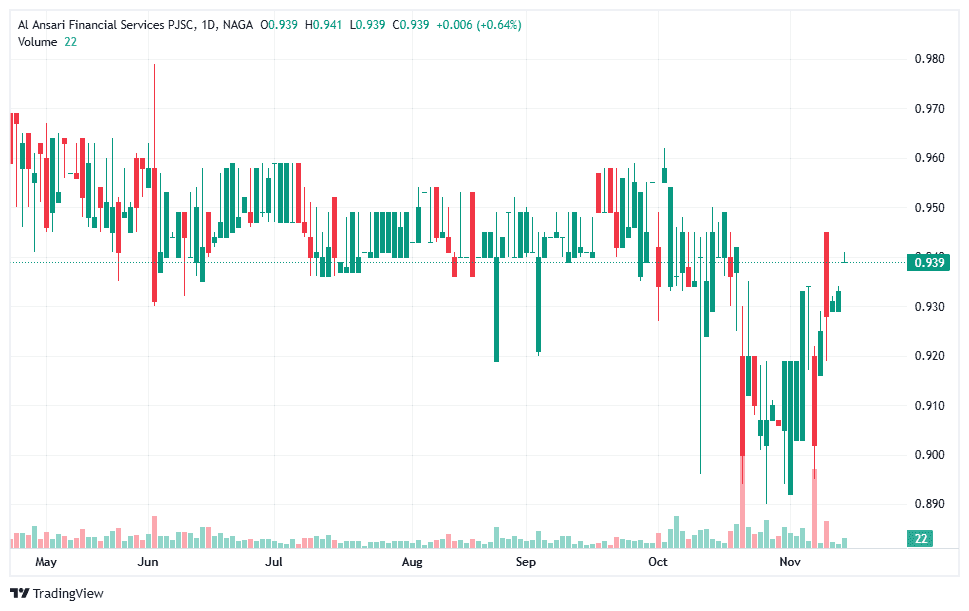
Past performance is not a reliable indicator of future results. All historical data—including, but not limited to, returns, volatility, and other performance metrics—should not be considered a guarantee of future performance.
The company's performance can be influenced by remittance volumes, customer activity, exchange-house competition, operating efficiency, and regulatory requirements. Investors may also examine the development of digital payment channels and how the company adapts its services as customer preferences change.
What to consider when researching Al Ansari Financial Services
- Remittance volumes and transaction activity.
- Revenue diversification across financial services.
- Digital-channel adoption and operating efficiency.
- Regulatory developments and competitive pressure.
#4 Commercial Bank of Dubai – A UAE Banking Stock
Commercial Bank of Dubai (CBD) is a UAE banking institution serving retail, corporate, and institutional customers. Its activities include conventional banking services, financing, deposits, and other financial products for individuals and businesses.

Past performance is not a reliable indicator of future results. All historical data—including, but not limited to, returns, volatility, and other performance metrics—should not be considered a guarantee of future performance.
Investors researching CBD can assess the quality of its loan portfolio, growth in deposits and financing, net interest income, fee-based revenue, and operating expenses. As with other banks, credit conditions and the broader UAE economy can influence demand for financing and the level of credit risk.
What to consider when researching Commercial Bank of Dubai
- Loan and deposit growth.
- Asset quality and credit-loss provisions.
- Net interest income and non-interest revenue.
- Capital adequacy and operating efficiency.
#5 Dubai Investments – A Diversified UAE Investment Company
Dubai Investments is a diversified investment company with interests across several business areas. Its portfolio has included activities connected to Real estate, manufacturing, investments, and other sectors, giving investors exposure to more than one area of the UAE economy.
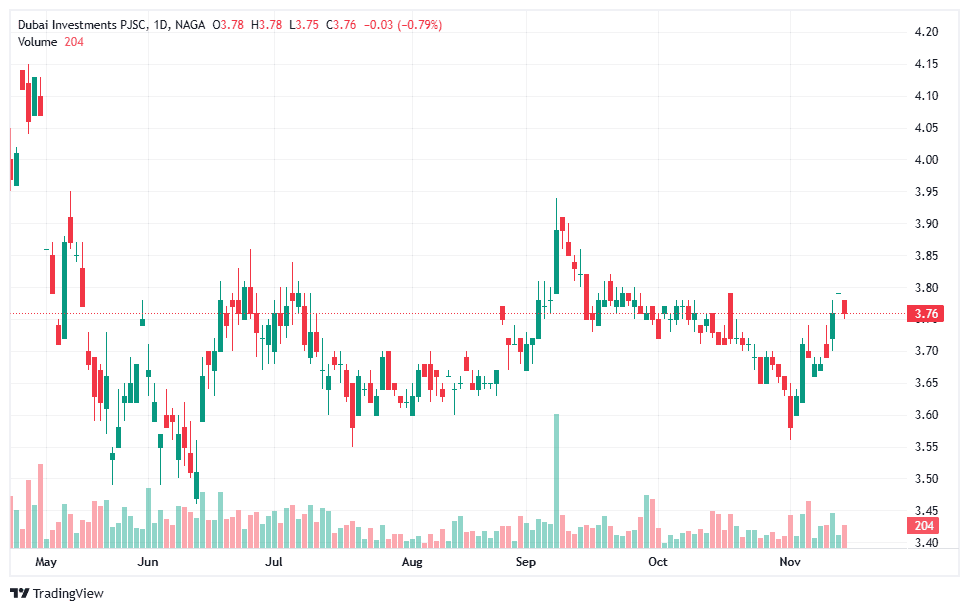
Past performance is not a reliable indicator of future results. All historical data—including, but not limited to, returns, volatility, and other performance metrics—should not be considered a guarantee of future performance.
A diversified business can provide exposure to different sources of revenue, but it can also make analysis more complex. Investors should examine the performance of individual business segments, the value and quality of the company's investments, cash flows, debt levels, and any changes in its portfolio.
What to consider when researching Dubai Investments
- Performance and contribution of individual business segments.
- Investment portfolio composition and valuation.
- Cash flow, debt, and capital allocation.
- Exposure to property-market and broader economic cycles.
#6 Emaar Development – A UAE Real Estate Development Stock
Emaar Development is a UAE property developer focused on residential and related real estate projects. Its business is linked to the development and sale of homes and communities, with performance influenced by property demand, project delivery, pricing, and the pace of new launches.
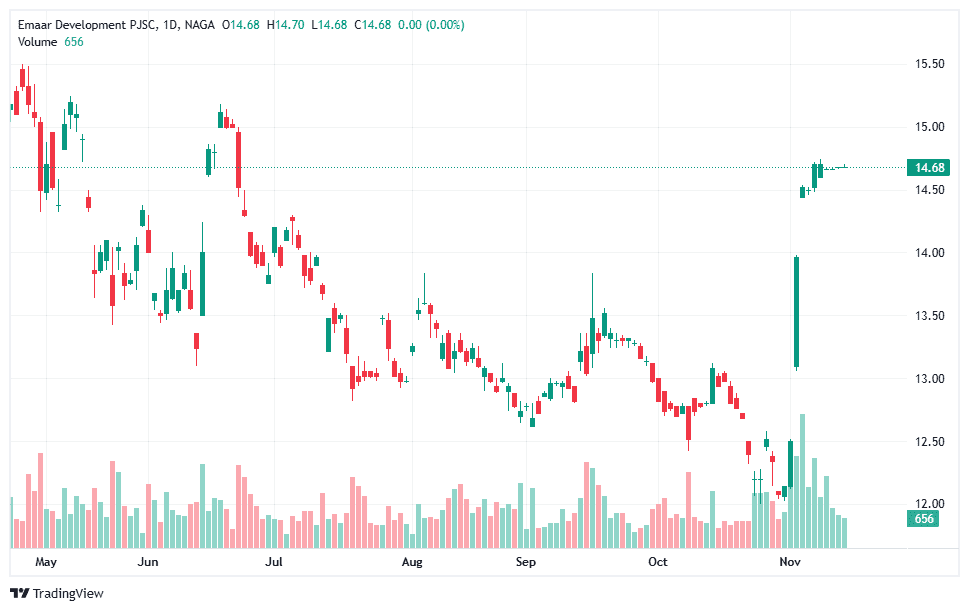
Past performance is not a reliable indicator of future results. All historical data—including, but not limited to, returns, volatility, and other performance metrics—should not be considered a guarantee of future performance.
Investors researching Emaar Development should consider the company's project pipeline, property sales, recognised revenue, construction costs, cash collection, and delivery schedule. Real estate companies can be sensitive to changes in market sentiment, financing conditions, supply, and demand.
What to consider when researching Emaar Development
- New property sales and the value of the development pipeline.
- Project delivery, construction costs, and completion schedules.
- Cash collection and the company's financial position.
- Property supply, demand, and market conditions in the UAE.
#7 Emirates Integrated Telecommunications Company (du) – A UAE Telecommunications Stock
Emirates Integrated Telecommunications Company, known as du, is a UAE telecommunications provider. Its activities include mobile and fixed-line connectivity, broadband, and business-related telecommunications and digital services.
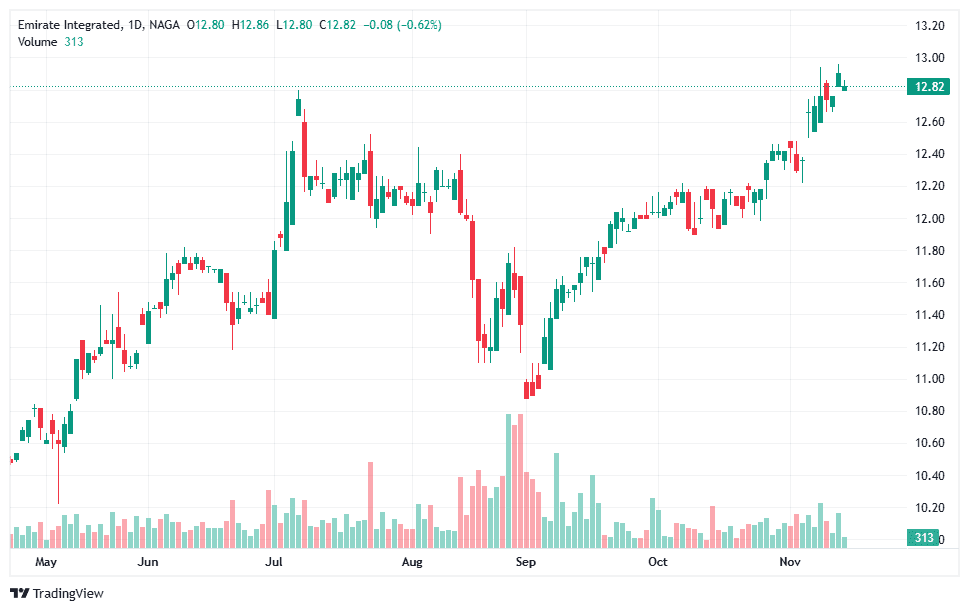
Past performance is not a reliable indicator of future results. All historical data—including, but not limited to, returns, volatility, and other performance metrics—should not be considered a guarantee of future performance.
Telecommunications companies may appeal to investors looking for exposure to an essential service, but their performance still depends on competition, network investment, customer growth, pricing, and technology changes. Investors can review subscriber trends, average revenue per user, capital expenditure, and the contribution of business and digital services.
What to consider when researching du
- Mobile and fixed-line subscriber trends.
- Average revenue per user and customer retention.
- Network investment and capital expenditure.
- Competition, digital services, and dividend policy.
#8 Parkin Company – A UAE Mobility and Parking Services Stock
Parkin Company operates in the parking sector in Dubai. Its activities are connected to the management and operation of public parking facilities and related services, making the company part of the wider urban mobility and infrastructure ecosystem.
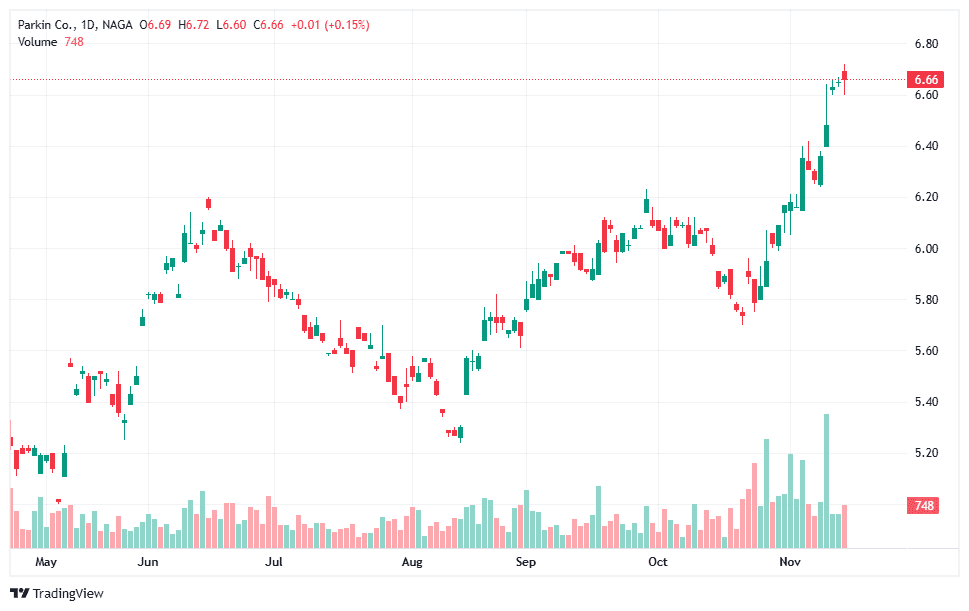
Past performance is not a reliable indicator of future results. All historical data—including, but not limited to, returns, volatility, and other performance metrics—should not be considered a guarantee of future performance.
Investors researching Parkin may want to examine parking demand, the number and type of parking spaces under management, tariff structures, operational efficiency, and the development of related services. Regulatory decisions, changes in mobility patterns, and the expansion of transport alternatives can also influence the business.
What to consider when researching Parkin
- Parking demand and utilisation rates.
- Changes in the number and type of managed parking spaces.
- Pricing, operating costs, and cash generation.
- Regulatory developments and changes in urban mobility.
#9 Spinneys 1961 Holding – A UAE Consumer and Retail Stock
Spinneys 1961 Holding operates in the food retail sector, with supermarkets and related retail activities serving consumers in the UAE and the wider region. Its business is linked to everyday consumer spending, product availability, store operations, and brand positioning.
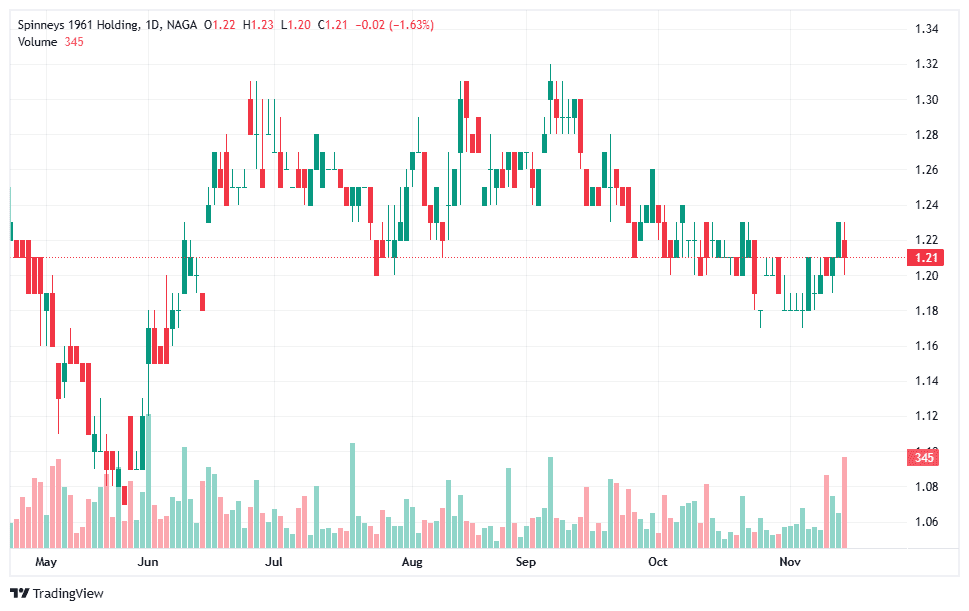
Past performance is not a reliable indicator of future results. All historical data—including, but not limited to, returns, volatility, and other performance metrics—should not be considered a guarantee of future performance.
Investors analysing a food retailer can examine like-for-like sales growth, store expansion, gross margins, inventory management, operating costs, and customer demand. Retail businesses may be affected by competition, changes in consumer spending, supply-chain costs, and the cost of opening and operating new stores.
What to consider when researching Spinneys
- Same-store sales and customer demand.
- Store expansion and revenue growth.
- Gross margins, inventory, and operating expenses.
- Competition and changes in consumer spending.
#10 TECOM Group – A UAE Commercial Real Estate and Business Districts Stock
TECOM Group develops and operates business districts and commercial ecosystems in Dubai. Its portfolio serves companies and professionals across sectors such as technology, media, education, design, and other specialised business activities.
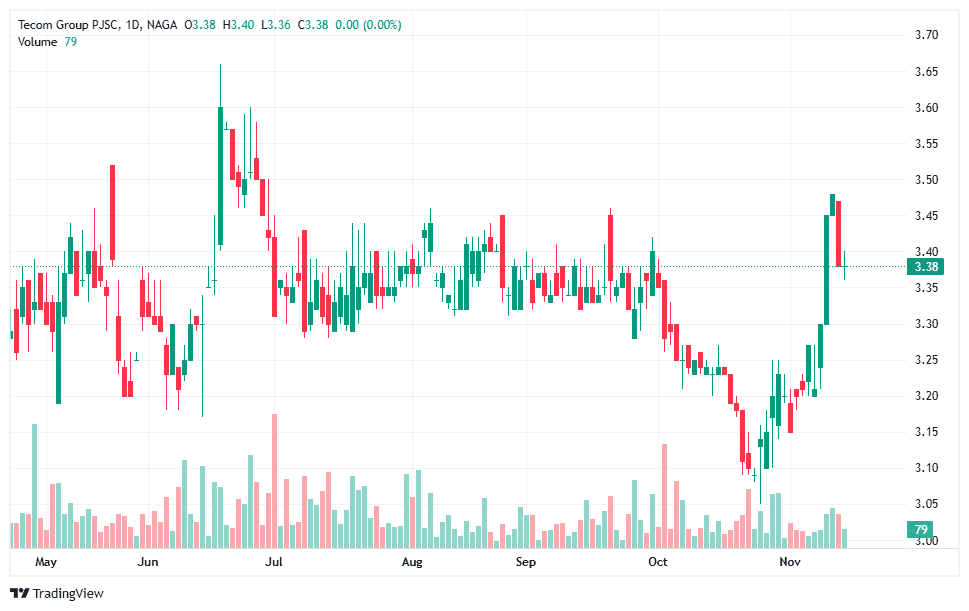
Past performance is not a reliable indicator of future results. All historical data—including, but not limited to, returns, volatility, and other performance metrics—should not be considered a guarantee of future performance.
Investors researching TECOM Group can assess occupancy levels, leasing activity, rental income, tenant retention, and the performance of its business districts. Demand for commercial space, the creation of new business clusters, and changes in office and industrial property requirements can all influence the company's results.
What to consider when researching TECOM Group
- Occupancy rates and leasing performance.
- Rental income and tenant retention.
- Development plans and capital expenditure.
- Demand for commercial, industrial, and specialised business space.
The companies above operate in different sectors and face different market conditions. Comparing them therefore requires sector-specific analysis rather than relying on a single metric or assuming that all UAE stocks carry similar risks.
UAE Stocks Compared: Sectors, Business Models, and Key Investment Factors
The ten UAE-listed companies featured in this guide operate across different industries and have distinct business models. The comparison below highlights their main activities, potential investment drivers, and key risks investors should research before making a decision.
Company Sector Main Business Driver Key Factors to Analyse Main Risks Air Arabia Aviation Passenger demand and route expansion Load factor, passenger growth, fuel costs Fuel prices, competition, travel disruptions Ajman Bank Islamic Banking Financing and deposit growth Asset quality, capital, liquidity Credit risk and financing conditions Al Ansari Financial Services Financial Services Remittances and exchange services Transaction volumes, margins, digital adoption Competition and regulatory changes Commercial Bank of Dubai Banking Loans, deposits, and banking services Asset quality, net interest income, capital Credit risk and economic conditions Dubai Investments Diversified Investments Performance of its investment portfolio Segment results, cash flow, debt, asset values Market exposure and portfolio concentration Emaar Development Real Estate Property sales and project development Sales backlog, deliveries, cash collection Property cycles, supply, construction costs du Telecommunications Connectivity and digital services Subscriber growth, ARPU, capital expenditure Competition and network investment costs Parkin Parking and Mobility Parking demand and managed spaces Utilisation, tariffs, operating efficiency Regulatory changes and mobility trends Spinneys Consumer Staples / Retail Food retail sales and store expansion Same-store sales, margins, inventory Competition and operating costs TECOM Group Commercial Real Estate Business district occupancy and leasing Occupancy, rental income, tenant retention Commercial property demand and vacancies
This comparison is based on business activities and analytical factors rather than current share-price performance. It does not rank the companies or indicate which stock is expected to deliver the highest return.
Expert Insight: How Should Investors Diversify Across UAE Stocks?
We asked Frank Walbaum, NAGA Lead Market Expert, to share his perspective on the importance of sector diversification when building a portfolio of UAE stocks and managing exposure to market risks.
"Diversification should go beyond holding stocks from different sectors within the UAE. I would also look across different regions and markets to reduce exposure to country-specific risks. Combining UAE stocks with international equities and other asset classes can help balance a portfolio. The goal is not to avoid risk altogether, but to avoid having too much of your wealth depend on a single market."
How to invest in UAE stocks with NAGA
NAGA provides access to a range of financial instruments through its online platform, including real stocks and CFDs. The instruments available to each client may vary depending on their country of residence, account eligibility, and the current product offering.
The companies featured in this article were selected from the NAGA Real Stocks list shared for this update. Before placing an order, search for the company by name in the platform and check the instrument details to confirm that it is available in your account.
Real stocks vs. stock CFDs: What's the difference?
Buying a real stock means purchasing shares in a company. The investor owns the shares and may receive dividends when the company declares them, subject to the applicable terms and conditions.
A stock CFD is a derivative contract that tracks the price movement of an underlying share. It does not give the trader ownership of the company. CFDs may allow traders to take long or short positions and may involve leverage, which can magnify both gains and losses.
Feature Real Stocks Stock CFDs Underlying ownership Shares are owned by the investor, subject to the product terms. No ownership of the underlying shares. Potential dividends Shareholders may receive declared dividends. Cash adjustments may apply, depending on the CFD terms. Leverage Typically unleveraged when purchased on a 1:1 basis. Leverage may be available, subject to instrument and client conditions. Trading direction Investors generally buy shares and benefit if their value rises. Traders may take long or short positions. Main considerations Share price risk, company performance, liquidity, and investment horizon. Market risk, leverage, spreads, financing charges, and potential rapid losses.
Before trading, review the instrument's product information, applicable fees, trading hours, and risk disclosures on the NAGA platform. Do not assume that the terms for one stock or account type apply to every instrument.
Step-by-Step Guide to Start Investing with NAGA
- Open an account: Register with NAGA and complete the required identity verification.
- Access the markets section: Use the platform's search function to find the UAE company you want to research.
- Check the instrument type: Confirm whether the instrument is a real stock or a CFD before proceeding.
- Review the company: Examine available price information, company details, and relevant financial information.
- Understand the costs and risks: Check the applicable fees, spreads, currency conversion, and other instrument-specific conditions.
- Make an informed decision: Consider your investment objectives and risk tolerance before placing an order.
Explore the markets with NAGA
Research available instruments, compare companies, and explore the platform's investment and trading tools.
Final thoughts on the top UAE stocks
The UAE stock market includes companies operating across a wide range of industries. Air Arabia, Ajman Bank, Al Ansari Financial Services, Commercial Bank of Dubai, Dubai Investments, Emaar Development, du, Parkin, Spinneys, and TECOM Group offer examples of different business models that investors can research.
There is no single stock that is automatically suitable for every investor. A more informed approach involves understanding each company's operations, reviewing its financial performance, assessing valuation, and considering the risks associated with its sector.
If you are exploring UAE shares through NAGA, check the current instrument details in your account and distinguish between real-stock investing and CFD trading before placing an order. You can also continue learning about fundamental analysis, technical analysis, and stock investing through NAGA Academy.
Free resources
Before you start trading and investing in the UAE stock market, you should consider using the educational resources we offer like NAGA Academy or a demo trading account. NAGA Academy has lots of free trading courses for you to choose from, and they all tackle a different financial concept or process – like the basics of analyses – to help you become a better trader or make more informed investment decisions.
Our demo account is a suitable place for you to learn more about leveraged trading, and you’ll be able to get an intimate understanding of how CFDs work – as well as what it’s like to trade with leverage – before risking real capital. For this reason, a demo account with us is a great tool for investors who are looking to make a transition to leveraged trading.
Sources: